Speaking of Shellac
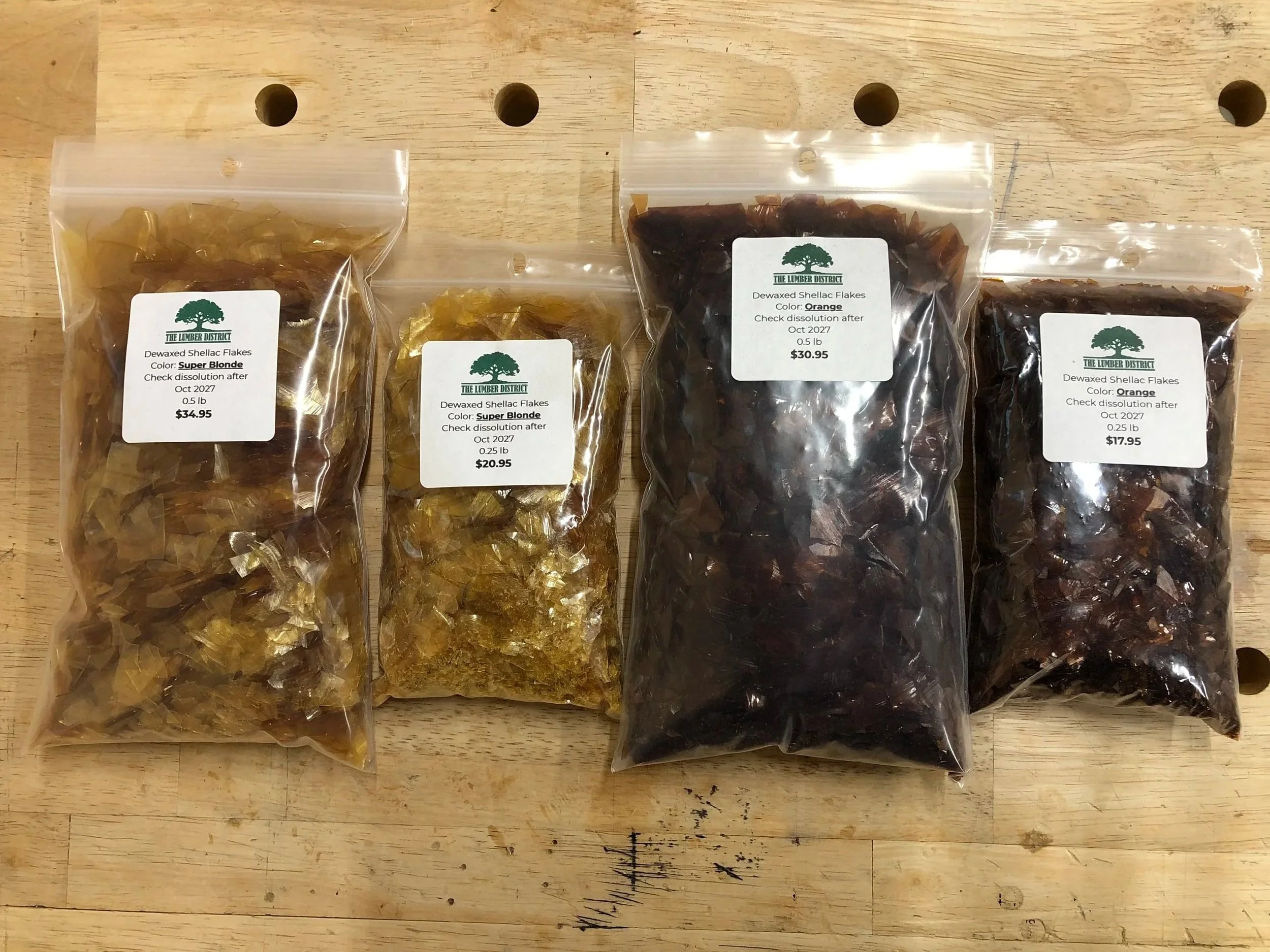
At The Lumber District we carry the two most popular types of dry shellac flakes for wood finishing: dewaxed super blond and dewaxed orange. Both in 1/4 lb. and 1/2 lb. bags. Shellac is a natural resin secreted by the lac bug. The resin is then harvested and processed into various grades and dissolved in alcohol for finishing woodwork. For years shellac has been wrongly maligned as a weak, obsolete and difficult to use finish. Much of this aspersion comes from the fact that mass produced shellac is marketed by big box stores in premixed 3 lb. cut containers which is too thick to apply easily. When mixed from dried flakes and thinned properly shellac is quite durable and simple to apply.Why Shellac
Shellac is one of my go to finishes for just about everything where I once used nitrocellulose lacquer or thin, slow drying wiping oils. Because processed shellac is a food safe finish once it’s dry, it poses few health issues. It’s easily dissolved in denatured alcohol, grain alcohol or medical ethanol. Since shellac sticks to almost every finish, it’s a universal sealer. Suppose you want to use a water-based dye stain with a water-based topcoat. Typically the water-based topcoat will dissolve the dye causing it to run. But if you spray a coat of dewaxed shellac over the stain it will seal it from the water-based topcoat. The shellac is completely compatible with both the stain and the finish. Also some water-based topcoats won’t adhere to oil based stains. Again spray a seal coat of dewaxed shellac between the two products and everyone gets along. Because shellac dries through solvent evaporation, it dries incredibly fast. No waiting a day between coats. Usually you can apply another coat after just a few minutes of dry time. Shellac also burns into itself by partially dissolving the previous coat so there’s no need to sand between coats to create a mechanical bond. Shellac has been around for along time making it a perfect finish for historical restoration and period reproductions. Freshly mixed shellac is quite durable and appropriate for interior furniture, gift/jewelry boxes and most millwork but since it dissolves in alcohol it wouldn’t be the best choice for a bar top.Preparing Flakes for Use
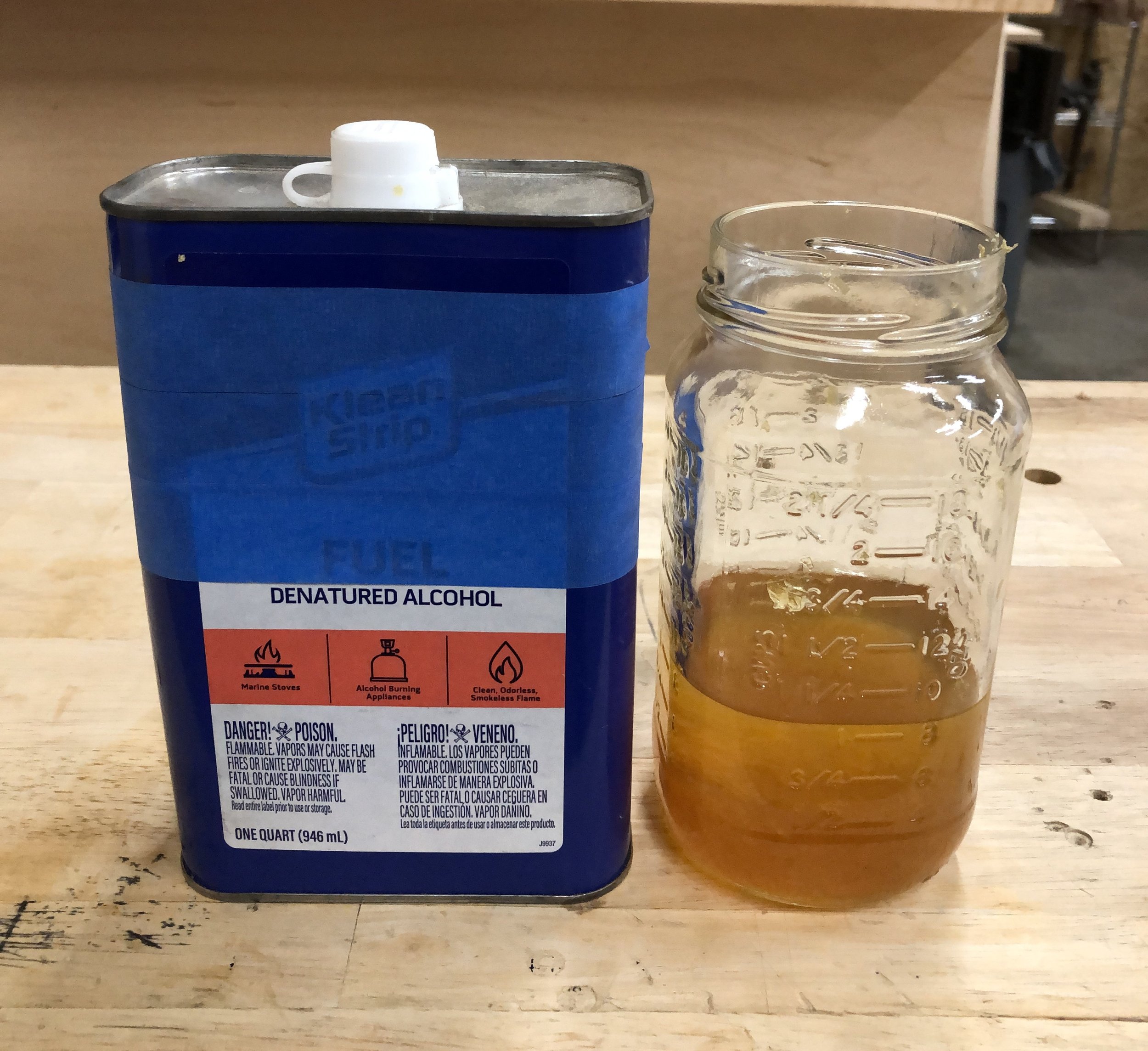
As stated before, shellac dissolves in grain alcohol. I usually mix it up in a 1 1/4 pound cut which is 1 1/4 pound of shellac to a gallon of alcohol which is a lot of finish. So I usually put a 1/4 pound of shellac flakes in about 3 cups of alcohol. I’ve tried grinding the dry flakes up in a coffee grinder before putting them in alcohol and even putting the whole concoction in a thrift store blender. Or you can just put everything in a clean food jar and giving it a shake a couple of times during the day. It should be ready the next day.Applying Shellac
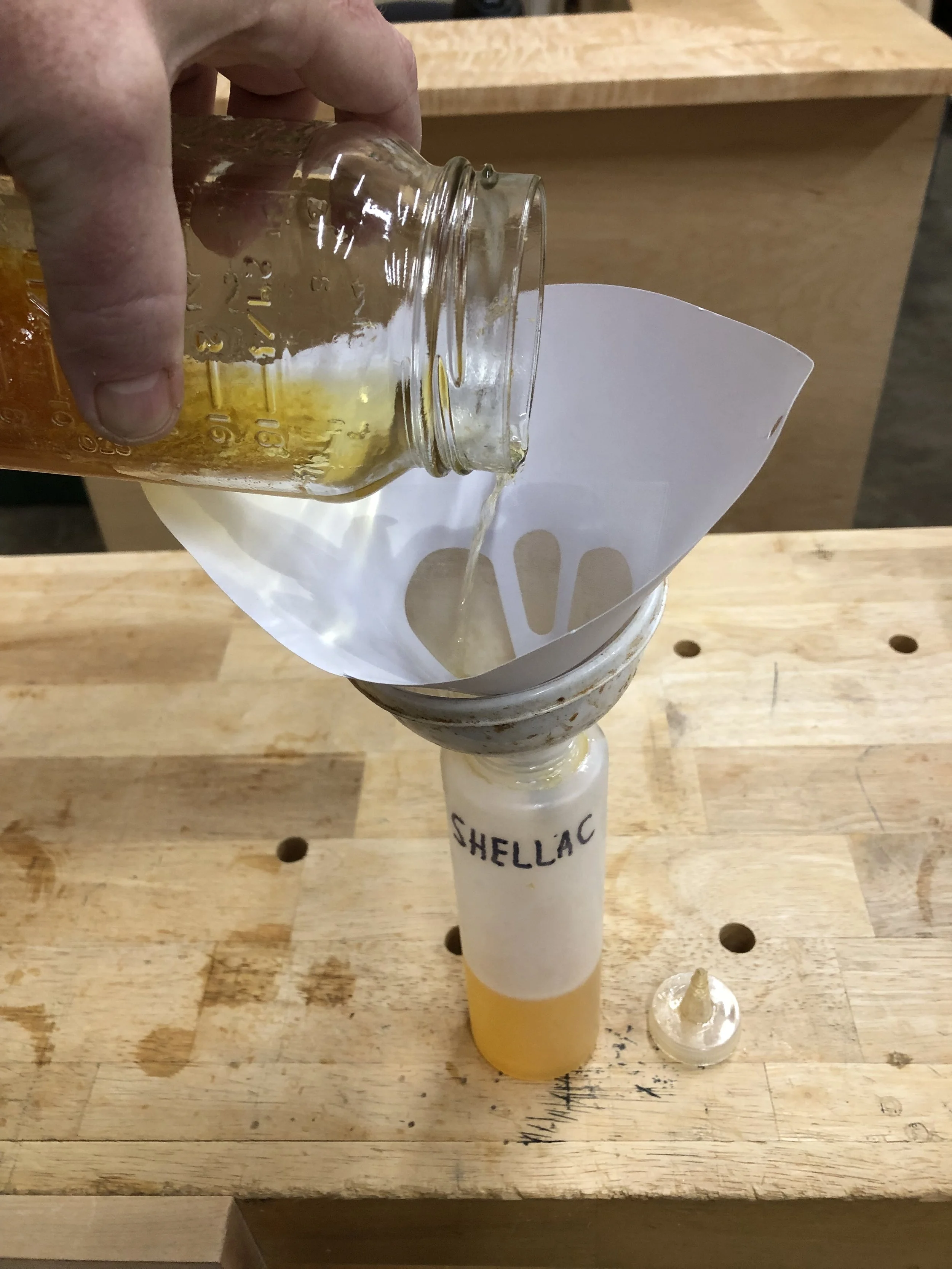
My favorite way to apply shellac is by padding it on. Start by straining the dissolved shellac through a paint filter into a plastic squeeze bottle the kind used for mustard and catsup. Dollar stores are good sources for these.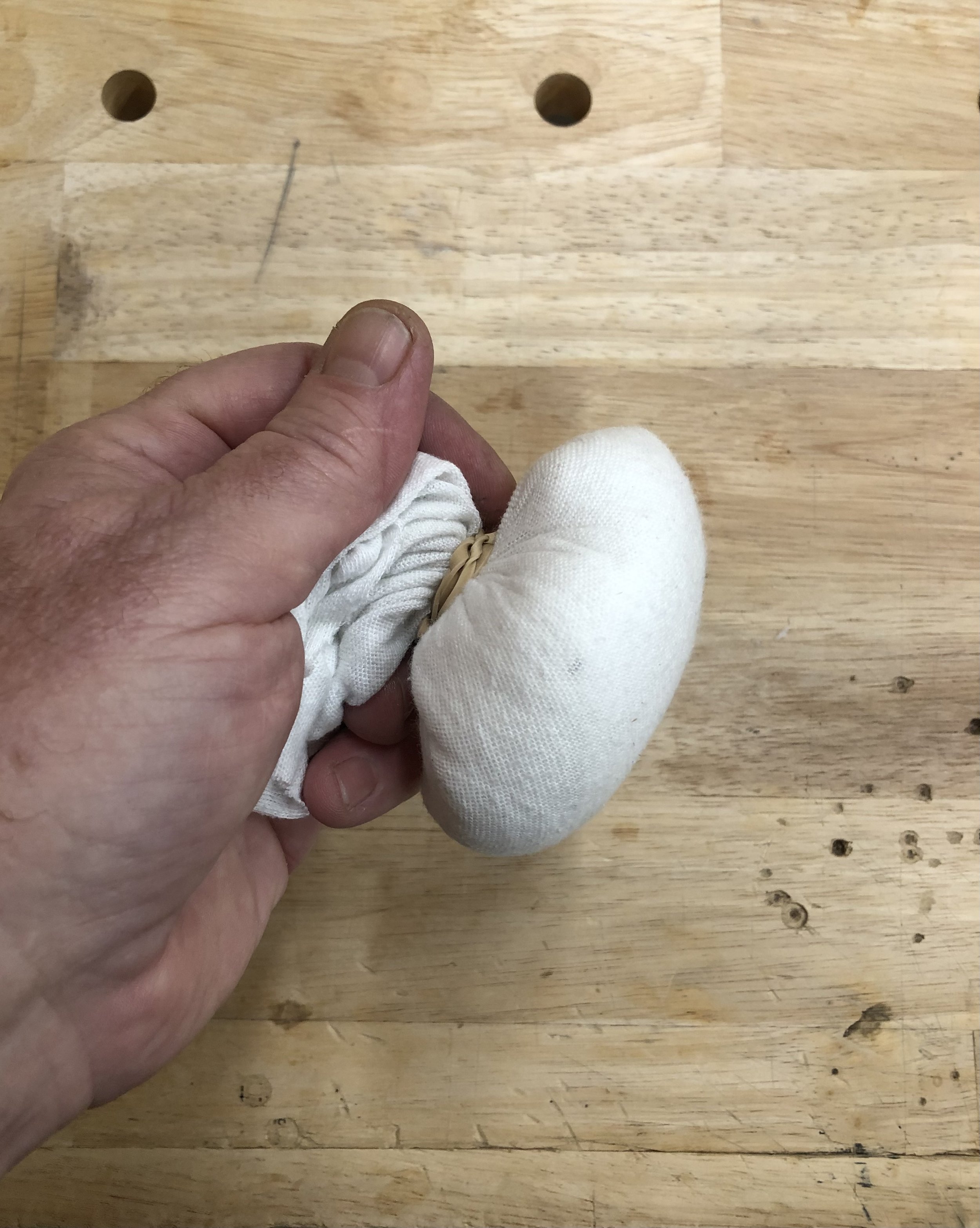
As for making the pad just bunch up any clean, white cotton rags to the size of an extra large egg and wrap it up in another cloth. Twist the corners of the wrapping cloth tight around the back of the pad and secure it with a rubber band. Painter’s cotton rags sold in hardware stores are fine. Flatten the pad by pressing it against a clean dry surface. Then squirt some shellac out of the squeeze bottle directly onto the flattened face of the pad and hit the face of the pad against a hard surface to disperse the shellac throughout the pad. Some people prefer to remove the wrapping cloth and squirt the shellac onto the bunched material and then replace the wrap. Try both ways but I don’t see much difference. To apply the shellac, grip the pad like a keyboard mouse and start wiping the the shellac on the surface of the wood with the grain making a slight overlap with each pass. Keep the pad moving and avoid stopping until the pad is off the wood to avoid burn marks from the alcohol dissolving previous coats. Add shellac to the pad as needed. You can reapply when the previous coat is dry which typically only takes a few minutes. It goes without saying but practice your padding technique on a few scrap boards before tackling a finished project.Finishing the finish
If you put on enough coats, shellac can get very glossy. To adjust a shellac finish to a softer looking satin sheen, rub out the cured finish with some 0000 steel wool lubricated with paste wax. Be sure to wait a couple of days to ensure the finish is hard enough to endure the process.Additional Tips
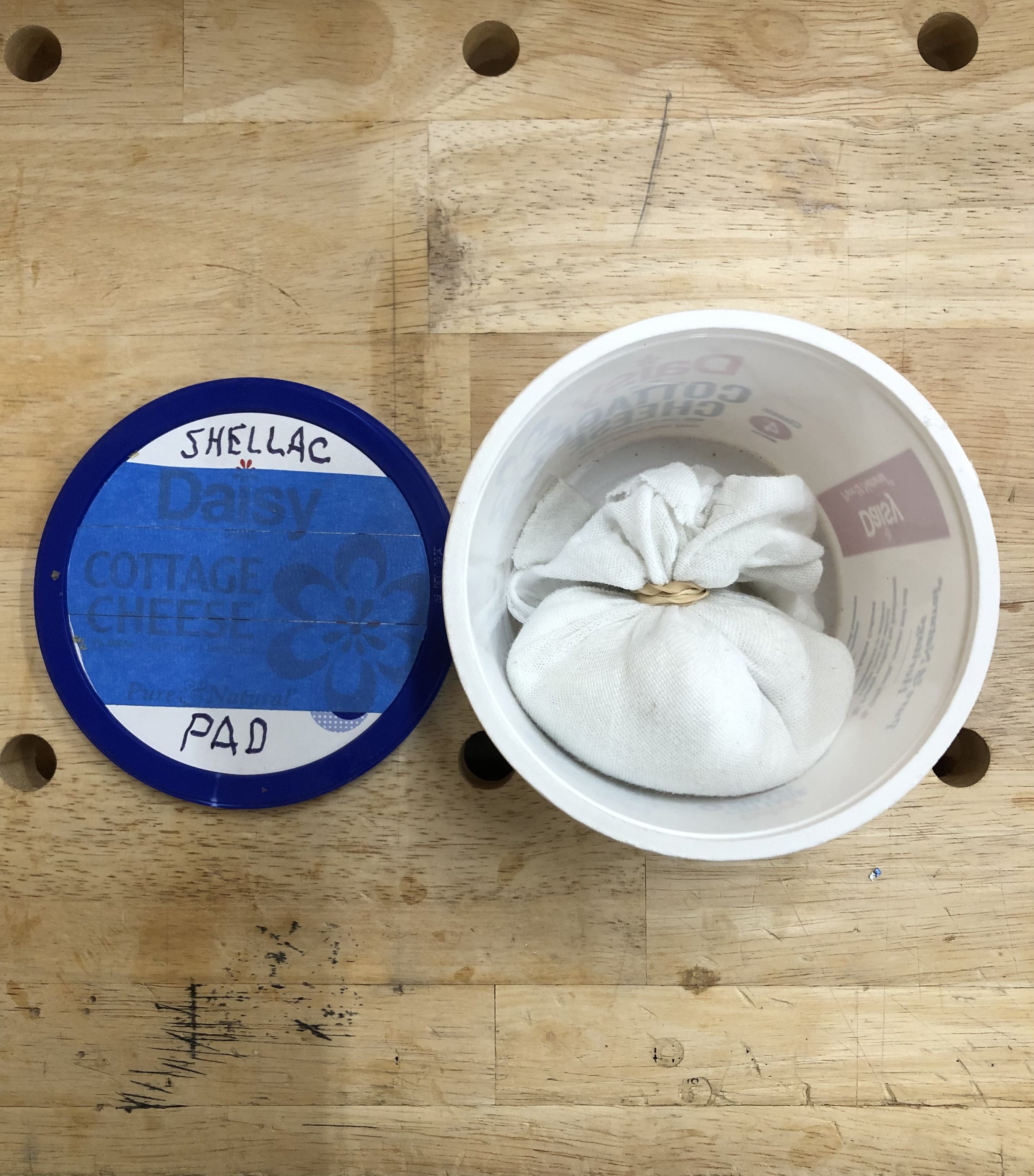
You can reuse your pad until it falls apart. Store the shellac pad in a recycled food container like a plastic yogurt or sour cream container. You may have to replace the outer wrap of the pad but the interior material should be fine for awhile. Throw the pad and the container away when mold starts to develop.Even though sanding between coats isn’t technically necessary because shellac bonds to itself, it may desirable to flatten a previous coat due to grain raising or obvious uneven application. Just lightly sand with 400x or 600x sandpaper and throughly dust before applying the next coat.Shellac has a limited shelf life so only mix up what you plan to use in the near future. Opinions vary on the shelf life of fresh mixed shellac so it’s a good idea to write the date on the container and throw it out if there’s any doubt. You can always test it on some scrap wood to be sure.