An Introduction to Buying Hardwood Lumber
By Chris Black
At The Lumber District, we work hard to be user friendly and are genuinely happy to answer any questions you might have about lumber or woodworking in general. That said, we know that if you’re new to woodworking or have never purchased from a hardwood supplier before that it can be confusing and even overwhelming. So we thought it might be helpful to answer a few common questions here.What’s the difference between softwoods and hardwoods?
Softwoods are coniferous trees that are mostly evergreens having needle or scale-like leaves and bear their seeds in cones. Think of pine, spruce, fir and cedar. Hardwoods are deciduous trees that typically shed their leaves annually. Examples are ash, cherry, maple, oak and walnut. Now just because a certain wood species is designated a hard or soft wood doesn’t necessarily correspond to its relative hardness or its intended use. For instance, some sub-species of southern yellow pine while classified as softwoods are considerably harder than say basswood which is technically a hardwood.How is hardwood sold?
If you’ve ever purchased lumber from a builder’s supply or a home center, you will have noticed that they primarily sell softwoods in uniformed dressed lengths, thicknesses and widths such as an 8’ x 2” x 4”. The actual size would be 8’ long by 1-1/2” thick by 3-1/2” wide. On the other hand hardwoods are more often sold rough sawn in random lengths and widths with thicknesses expressed in quarters of an inch. For example, a 1” thick board is called four quarter (there are four 1/4 inches in one inch) and is written as 4/4. A 1-1/4” thick board is 5/4 and so on. As a result of not having uniform sizes, hardwoods are sold by the board foot. To calculate board feet of rough sawn hardwood lumber you multiply the length in inches by the width in inches by the thickness in inches to the nearest quarter inch then divide by 144. If your board has been dressed in thickness then you use the original thickness to calculate board feet. Once you get the number of board feet, you multiply that number by the price per board foot to get the total price of the board. A word of caution here. Hardwood lumber is like any commodity and prices of any given wood species can change frequently.Are hardwoods always sold rough sawn?
While hardwoods are predominantly sold rough sawn, there are options. For example, at The Lumber District, we skip plane (plane one face side) our tiger maple so you can see the wood’s figure before you purchase it. Skip planning also leaves the bulk of the board’s thickness for further processing such as flattening and or thicknessing. Further processing includes S2S (surfaced two sides), S3S (surfaced 2 sides with 1edge straightened). The straightened or joined edge allows you to run it against your tablesaw’s fence to rip the board to its final dimension. Then there’s S4S which is all sides surfaced. These options are available for a fee if you don’t have access to to jointer or thickness planer.What are the differences between flat, quartered and rift sawn boards?
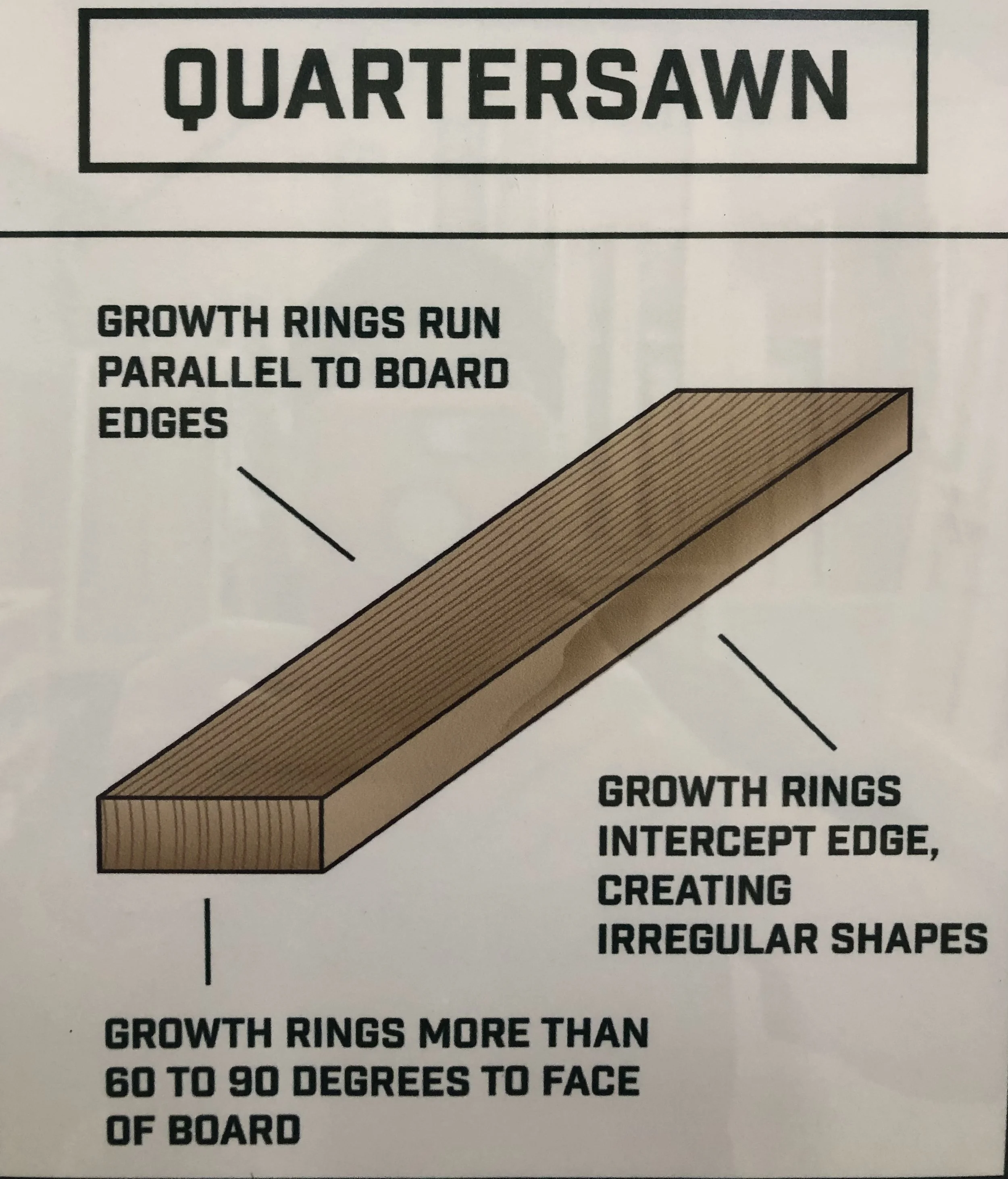
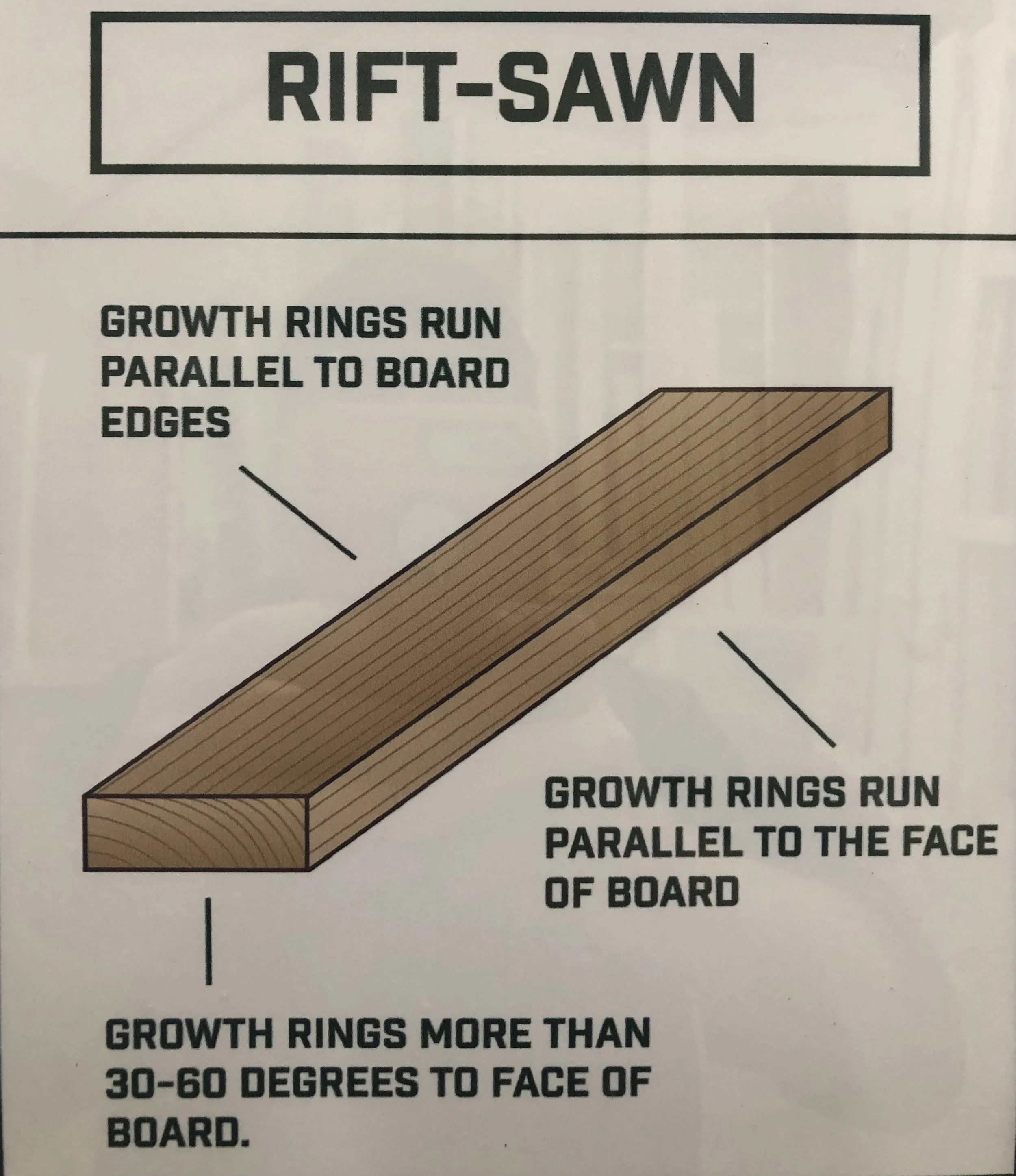
Plain-sawn, also called flat-sawn, is the most common category and is the least expensive. When the board is flat-sawn from the outside of the log, it produces a random grain pattern that can range from a curved cathedral effect to a quartersawn look from boards milled from the center of the log. You typically get the most interesting looking figure on the faces of flat-sawn wood. These outside flat-sawn blocks are usually the least stable and are more prone to cupping. Quartersawn logs are ripped into four quarters so that the face grain runs at right angles to the board. This produces a generally straight and parallel grain pattern on the 2 the two face sides of the board. It tends to be more stable than plain-sawn boards but is more expensive. Rift-sawn is similar to quartersawn but it is cut in such away that it produces straight and parallel grain patterns on all four faces of the board. It’s usually the most expensive because it generates the smallest yield from the log.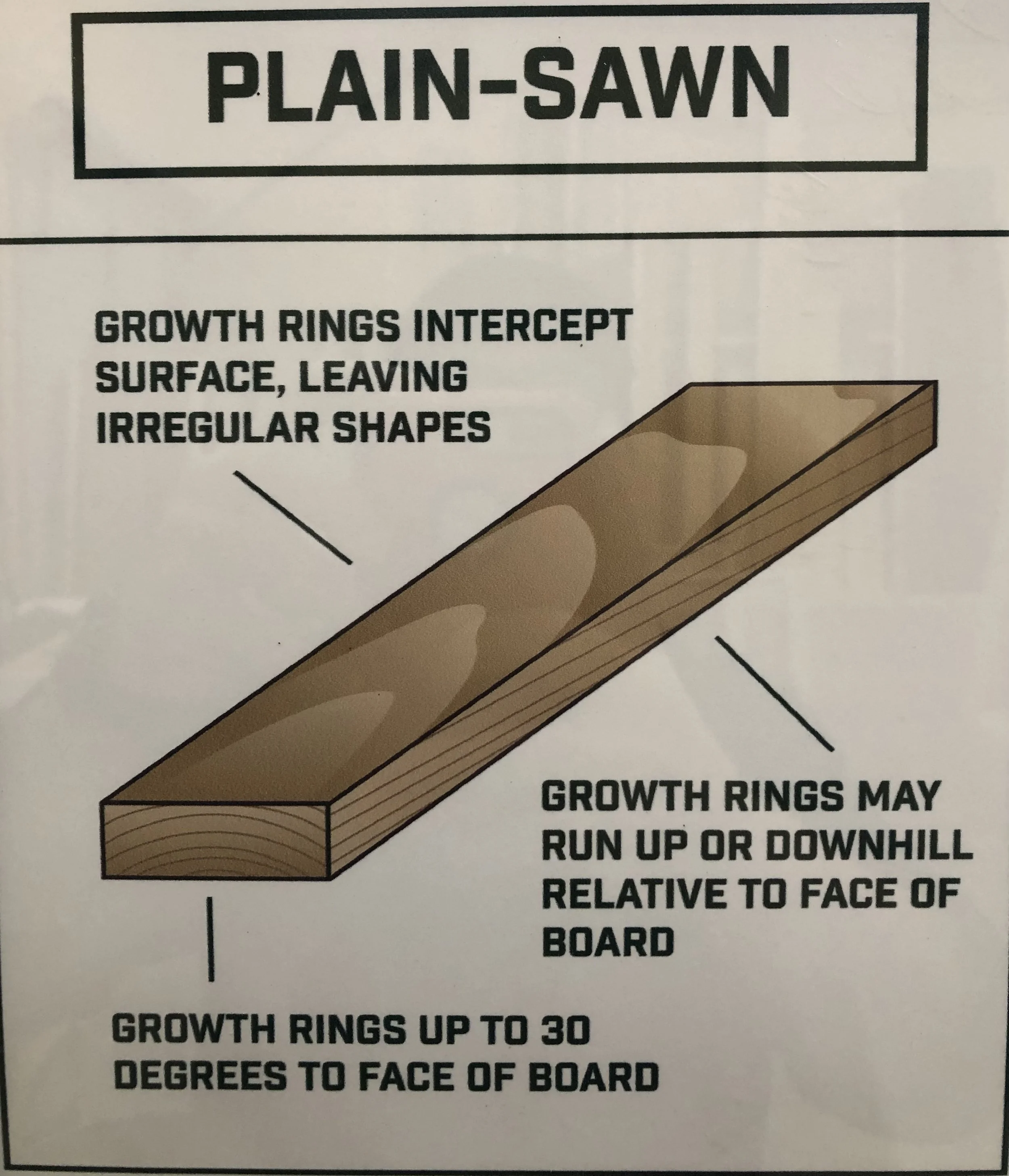
What are some of the uses for the different types of sawn boards?
Flat-sawn timbers generally lend themselves to large surfaces like table tops, door panels and other areas which require visual interest or effect. Consider quartersawn stock for face frames and door frames for stability or where two components meet so the grains match and doesn’t detract from the focal points. Rift-sawn stock might be chosen for table legs or railing posts where all four sides need to be unformed.What if I have a small project and don’t need a whole board?
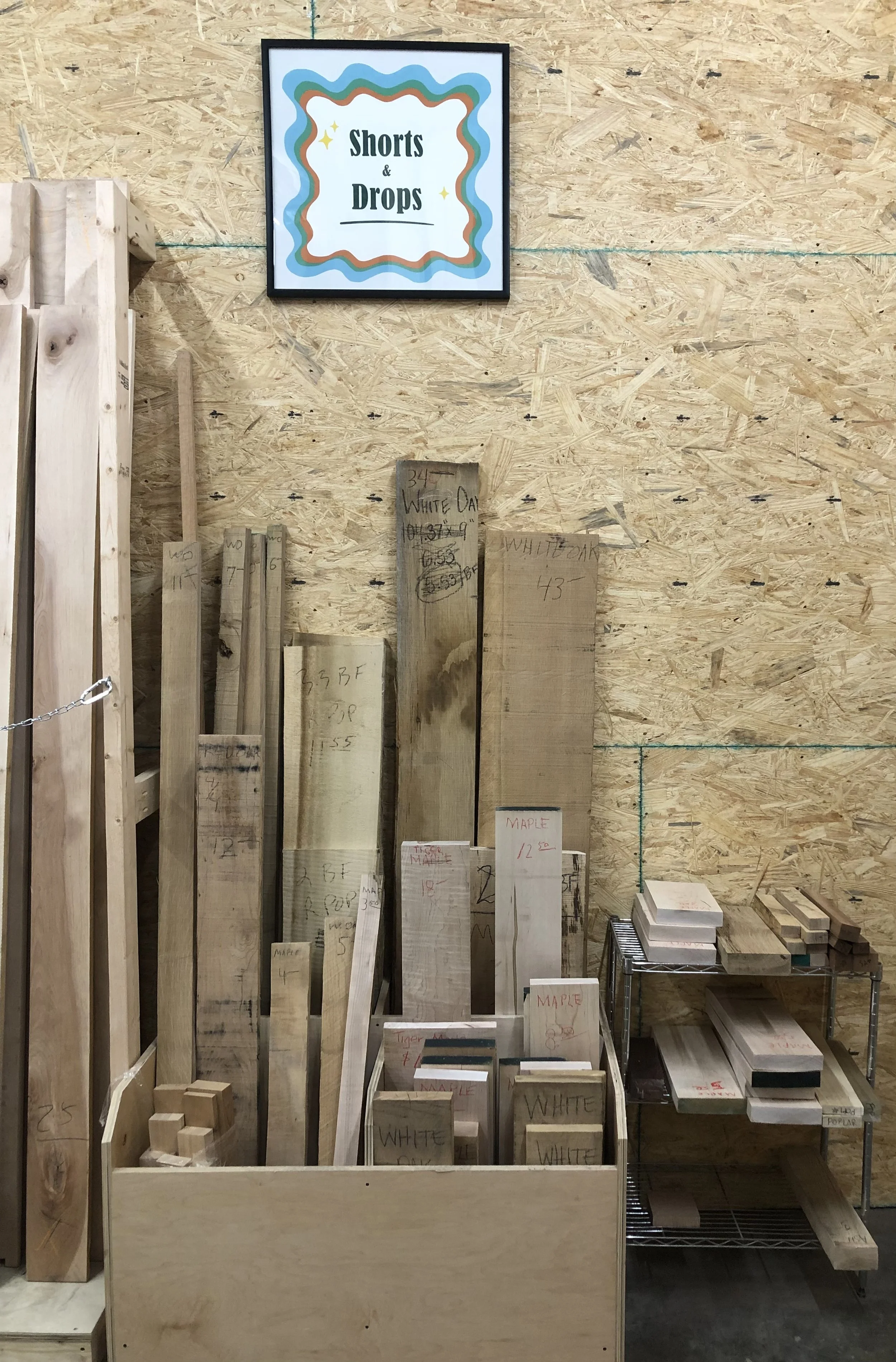
Of course you could go in with a friend and split the board. We’ll cut it in half for you. Or you can pick up some smaller pieces from our shorts and drops section. Shorts and drops are usually leftovers from our woodworking shop. They are random, value priced pieces of various species and sizes that would be perfect for projects like cutting boards, tool handles, carvings, picture frames and toys. This inventory changes frequently so check by often.